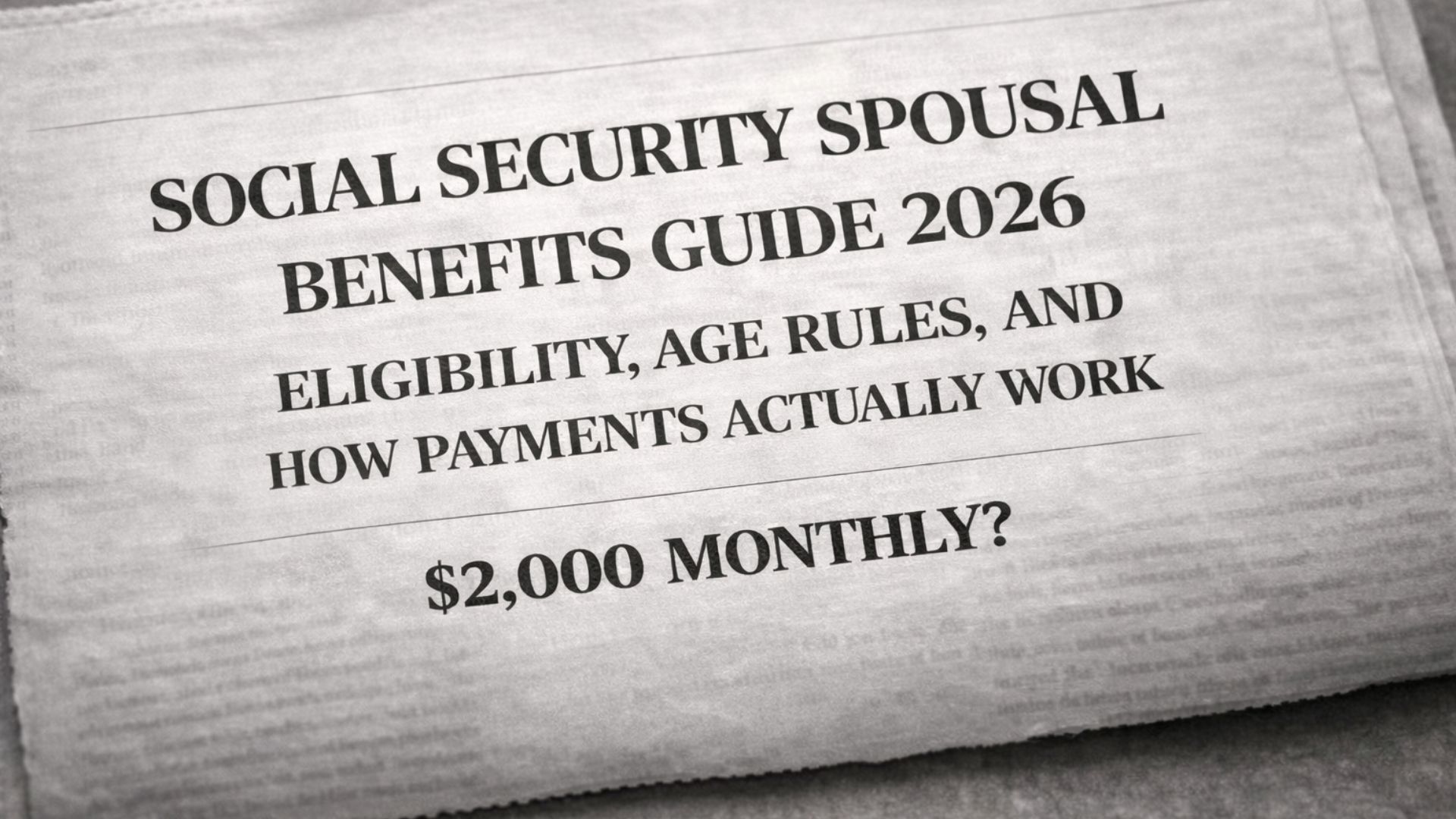
Interest in Social Security spousal benefits has grown as 2026 approaches, especially among married couples planning retirement. Many people are searching online for updates, increases, or special changes, but this has also led to confusion. The truth is simple: Social Security spousal benefits in 2026 follow the same long-standing rules that have been in place for years. There are no new expansions, bonus payments, or special programs. Understanding the real rules can help couples make better decisions and avoid false expectations.
No New Changes to Spousal Benefits in 2026
Social Security spousal benefits have not been modified for 2026. The program continues under existing federal law, with only standard cost-of-living adjustments applied to benefit amounts. Eligibility requirements, age limits, and calculation methods remain exactly the same. Any claims suggesting new rules or expanded benefits are not supported by official Social Security policy.
How Social Security Spousal Benefits Are Calculated
Spousal benefits are based on the working spouse’s Full Retirement Age benefit amount, not on the amount they actually receive if they claim early or delay benefits. The maximum spousal benefit is up to 50 percent of the worker’s Full Retirement Age benefit. This percentage does not increase if the worker delays their own retirement benefits beyond Full Retirement Age.

Age Requirements and Claiming Timing
The earliest age to claim spousal benefits is 62, but claiming that early permanently reduces the monthly payment. To receive the full spousal benefit, the spouse must wait until their own Full Retirement Age, which ranges between 66 and 67 depending on birth year. Waiting beyond Full Retirement Age does not increase spousal benefits, because delayed retirement credits do not apply to this type of benefit.
How Personal and Spousal Benefits Work Together
If someone qualifies for both their own retirement benefit and a spousal benefit, Social Security does not pay both in full. Instead, the agency pays the higher amount. If the spousal benefit is higher than the person’s own benefit, Social Security adds only the difference to reach the spousal amount. This rule often surprises people who expect two separate payments.
Work and Earnings Limits
If a spouse claims benefits before reaching Full Retirement Age and continues to work, earnings limits may temporarily reduce monthly payments. Once Full Retirement Age is reached, these earnings limits no longer apply, and benefits are no longer reduced due to income from work.
What This Means for Couples in 2026
Social Security spousal benefits in 2026 remain stable and predictable. There is no special increase beyond normal adjustments, and no new eligibility categories. The most important factors are age, timing, and understanding how benefits are calculated. Careful planning can make a meaningful difference in long-term retirement income.
Disclaimer:
This article is for informational purposes only and does not provide financial, legal, or retirement advice. Social Security rules and benefit amounts are governed by federal law and official government guidance. Individuals should consult the Social Security Administration or a qualified professional for advice specific to their situation.